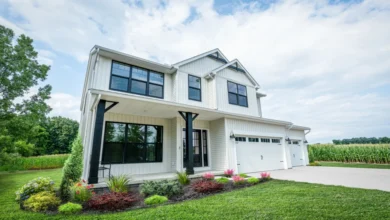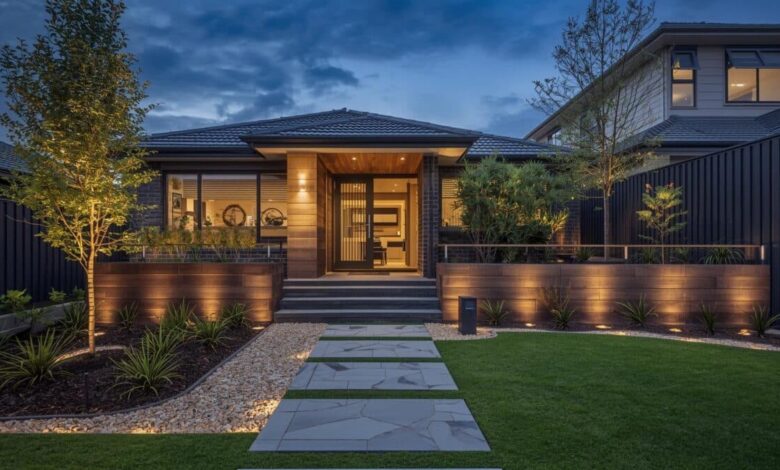
Most homeowners think of their property as one whole outdoor area and design it as such. This is wrong. Your front yard and backyard cater to different audiences, different needs, and different psychological requirements, and muddling them together results in spaces that don’t perform either role effectively.
The Public vs. Private Divide
Your front yard is not truly owned by you. In essence, it is there for everyone walking by, coming to your door, or judging your home for the first time. This fact governs everything you choose to do with it, from how high the plants grow, to where the path will be, to the style of outdoor lighting you will install.
The backyard is the exact opposite. It isn’t seen by the world unless you invite the world. It is a room outside your house just minus a roof, and that changes everything.
Backyard Design: Function and Dwell Time
Where the front yard invites people in, the backyard is the sanctuary that people never want to leave. That’s a big difference in purpose.
Backyard hardscaping is about creating places to be, wide walkways that feel like room-sized outdoor corridors, a poured concrete pad that’s made for a grill, or cozying up to stonework around a fire bowl.
The biggest mistake with decks and patios is not building them big enough to be functional. Professionals like Canepa Landscaping believe in right-sizing spaces so that your patio isn’t just a path around the house or a deck isn’t so small it only fits a grill.
The backyard should be zoned for the variety of activities you actually engage in. That might mean a comparatively larger dining area and reducing the amount of lawn your space devotes, which, in addition to being underused, demands a fair amount of ongoing upkeep.
Pathways in the front of a property are best kept simple and direct, the straightest distance between two points. The back of the house, though, should meander, a path that ribbons between your garden and outdoor dining area can become wide enough to serve part-time as overflow seating.
This is also where you up your game in terms of plant selection to create a sense of privacy. A garden bed in the front of a house tends to feature small plants and flowers selected for color. In the back, you mass larger, deeper-rooted plants like ornamental grasses in sweeps that create room dividers of flora.
Front Yard Design: Framing and First Impressions
The main purpose of the front yard is to serve as a gateway to the house entrance. This means that your layout should be designed considering optimal visual cues and easy navigation rather than personal elements.
Paths must be direct and wide enough for at least two people to walk comfortably side by side without stepping on the grass. Plants must also be short enough as to not obstruct the view from windows and to allow the house design to be the center of attention.
Lighting should also primarily focus on functionality using lights along the path to make sure people can safely and easily walk up to the entrance at night.
Choosing the right plants is more important in front yard landscaping than it is in the back. You should choose low-maintenance evergreen plants that maintain their shape throughout the seasons. One bad pruning, a harsh winter or a flood from your kids’ toy can easily mess with your front yard appeal.
This also makes economic sense, careful landscape design can increase a house valuation by up to 12.7%. And most of the added value comes from front lawn landscaping.
The Regulatory Reality: Front Yards Have Rules
Front yards are subject to various regulations that backyards don’t have to deal with. For instance, there are municipal codes that may determine how far back your landscaping must be from the sidewalk to ensure visibility for drivers and pedestrians. Other codes may dictate the maximum height of plants in the front yard for similar reasons, or mandate that a certain percentage of the yard must be lawn.
HOAs are even more specific in many cases, also regulating the types of plants you can use in your front yard, the materials you’re allowed to use for hardscaping, and even the colors you’re allowed to repaint your house. It’s a lot to keep track of, and it’s even more of a lot if you fail to do so and realize you’ve got to wiggle within these lines or rip it out.
The backyard, by contrast, is almost entirely yours to do with as you like. Fence heights and setbacks aside, you have creative latitude that simply doesn’t exist at the front of the property.
Connecting the Two Without Losing Coherence
Side yards and gates function as transition zones. They establish a connection between the public image of your property and its private interior, yet they are usually neglected areas. And this neglect is visible.
A well-conceived transition, which can be as basic as using the same type of material from the front walkway to the side gate, indicates that the property was designed as a whole rather than a collection of parts. It doesn’t have to be fancy. It just has to seem deliberate.
The idea is not to make the front and back look the same. It’s to give the impression that they are part of the same property. This requires a different strategy than designing each space independently.
The best approach is to imagine that your property is divided into two environments that are next to each other. Design the front one for performance, the back for living, and thread them together. If you get that split right, both sides will do their job without one working against the other.