Why Materials Matter More Than Size
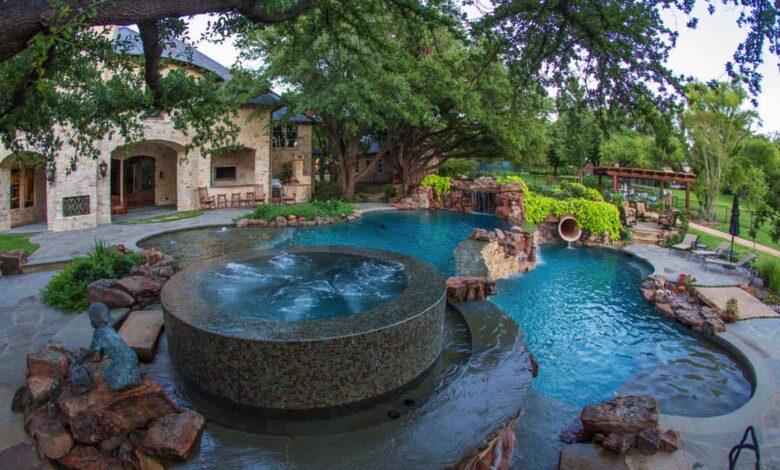
A large pool with an inappropriate finish will appear to be exactly what it is, a big hole filled with water. A smaller pool, but one tiled in glass mosaic, edged in drop-face travertine, and with lighting from below, will appear to be something out of a boutique hotel. Size did not alter the results, decisions did.
Those few inches between ordinary and truly sumptuous almost always come down to material and the manner in which they relate to each other, water, and light, at different times of the day. These are not superficial decisions. These are structural decisions that determine how the pool functions as it is used and how it appears from all vantage points of the property.
Renovating What’s Already There
Not every luxurious pool project needs to be built from the ground up. In fact, some of the most spectacular creations are on older properties with more established gardens and mature trees. Rejuvenating an existing pool can yield something that looks and feels so right in the outdoor space that it could have been part of the original design concept.
For each of these projects, the landscaping and architecture of the residence are integral to the overall design of the outdoor space in general and the pool, in particular. The pool’s place and purpose, its relationship to the home’s architecture, its orientation and shape within the landscape, the choice of materials for the pool shell, and the deck are all influenced by these existing conditions.
Specialist pool renovations sydney work has shown consistently that a dated fibreglass or painted concrete pool can be transformed into something that looks purpose-built for a contemporary outdoor space. The pool shell often doesn’t need to change, the finish, coping, lighting, and integration with the deck do.
The Tile Finish Sets the Baseline
Regular ceramic tiles get the job done. They’re sealed, they’re tough, and they’re easy to replace. They’re also flat, optically. What they can’t do is transmit water any visual depth or movement.
Glass mosaic tiles experience water quite differently. Their small format and reflective backing produce a micro-shimmer when light is on the water, the pool looks alive, the color shifts from aqua to deep blue depending on the time of day, and the waterline doesn’t appear to be a horizontal stripe so much as a gradation. Used with a contrasting waterline band in a darker hue, the water itself becomes a design element.
Pebblecrete and aggregate interiors fall into a different camp, more textural than reflective, with a natural, organic feeling that’s perfect for pool settings surrounded by stone landscaping or native planting. Both are real luxury finishes. The choice comes down to whether the aim is visual depth or tactile warmth.
Coping is the Detail Most People Underestimate
The coping you install in your pool is essential and can influence the overall look and feel of your pool area. Drop-face travertine coping could be the right choice, as it serves several purposes at once. This natural stone won’t have the uniform look of man-made materials. Plus, being naturally cool to the touch, it’s great outdoors in direct sun. Lastly, the slight bullnose profile softens the edge of each stone. This can contribute to a more comfortable walking surface and create a cleaner look that’s not as “busy” as other materials.
If you’re not a travertine fan, basalt is also a popular choice because of its density, color, and price. The dark, blackish hue and the density make basalt ideal for achieving a sleek, modern look. It’s also a favorite for geometric pools where space is the primary focus of aesthetic design.
Lighting as Architecture
The vast majority of pool lighting has one simple purpose: you don’t bump into stuff if you are in the pool at night. Luxury pool lighting performs a different function, it transforms your pool into the central element of your outdoor living space after the sun has set.
The right approach is always zonal. Underwater LEDs are the ideal choice for lighting the pool itself. Today’s color LED lights can shift in color from white to a deep amber creating an entirely different pool environment with a flick of your smartphone. Unfortunately, these pool lights seem random and isolated if your pool designer does not integrate them with your landscaping lighting. Low-voltage uplights installed behind shrubs or built into retaining walls mirror your pool’s light and appropriately frame the entire pool-landscape concept as a single composition.
The Wellness Shift
Sun shelves, which are the shallow, submerged ledges usually known as Baja shelves, have become a standard feature in premium pool construction. Especially when paired with spa jets or a resistance swim system, they have transformed the concept of what a pool is meant to be: not just for lap-swimming or summer party-throwing, but for daily use as a recovery and wellness center.
What you’re going to use the pool for shifts how everything else about it should be designed. A pool that gets used every day demands materials that feel good as they age, lighting that functions both at 6am and 10pm, and water chemistry that won’t irritate your skin, hence saltwater chlorination becoming a standard expectation and not an add-on upgrade.
This is the sort of pool that will be designed with those kinds of habits in mind. But that’s not the point. The point is: it’s the kind of pool that will perform in supporting those kinds of habits, 365 days a year. That’s what luxury is.