Losing a loved one is an emotional event, and soon after you will question everything. Where do you begin? What do you need to do? When you toss in the stress of the loss, the physical reality of dealing with a house full of stuff, items that have legal obligations attached to them, the legal process of which nobody ever taught you, and a handful of relatives who each deal with stress differently, and you have the perfect storm of anxiety, confusion, and procrastination.
Secure the Documents Before You Move Anything Else
Upon arriving at the home of a deceased relative, locating and securing legal and financial documents should be the first order of business. Wills, real estate deeds, insurance policies, tax returns, stock certificates, vehicle titles, bank statements, all of these should be rounded up, before you even think about beginning to clean out the rooms where they’re stored. These files can be scattered anywhere: filing cabinets, kitchen drawers, shoeboxes in closets, safety deposit key envelopes tucked inside books.
Don’t begin clearing a room until you’ve first turned the whole house upside down for this paperwork. A will that turns up too late in a load of debris may as well have been thrown in a dumpster a week after the funeral for how much legal force it carries; the same is true of a deed, and insurance offers no protection if the policy was thrown out with the expired coupons. But legal and financial documents are just easily destroyed by accident: They can turn up weeks later in the bottom of a soggy cardboard box, and in the meantime they can get stained, torn, or trod-upon. They should immediately be collected and set aside untouched, a purpose-made folder or, better yet, a binder that the rest of the family knows not to go through, save for the executor. Originals should be handed over to them, while all other family copies should be prepared by them.
This is all stuff you would do even if you were unburdened with moving real estate. It takes ten minutes with Google (and then maybe a ten-minute phone call for any last questions after you’ve skimmed the free searches) to determine whether or not an estate must go through probate, which any competent executor should do before distributing assets or finalizing a sale. If there’s no will at all, you’re basically guaranteed to have to go through probate, but even if there is a will, lots of estates still don’t have to. If there’s any doubt as to the probate status of an estate, call an attorney, and they’ll tell you for free. It takes ten minutes and saves months of potential legal and financial limbo.
Build an Inventory Before a Single Item Leaves the House
Once you have those documents locked down, go through every room in the house and construct a written inventory. Take photos of anything that has the potential to be considered valuable. This inventory has a few important functions: it can be used to back up any estate tax filing, it clearly shows the executor what was owned, and it’s a handy document to have when a family member says they never agreed that you could donate the entire collection of Hummel figurines.
This is when you bring in professional appraisers to give you the value of your high-end items. Do not skip this or try to do it yourself. A piece of jewelry, painting, or piece of furniture from the right time can be worth tens of thousands of dollars. An appraiser will provide you with paperwork sharing the item’s value. This ensures not only that the heirs get a fair amount of money if the piece is resold but also that the government gets its fair share of estate taxes on the profits if the piece is paid more than its estimated worth. You don’t want to find yourself in the position of having sold nanny’s pearls for seven grand before you discovered they were worth 90 grand.
For general household items, the itemized list of potential asset items can be relatively summary.
Think About Bringing in Professional Help
Following the estate sale (more on this process below), after the donations are gone, after family members have removed what they wish – you’re still left with lots of things. More things, often, than you anticipated or are prepared to deal with. And this is the emotional point in which you’re also hit with the reality that certain things need to go, heavily damaged furniture, piles of unused electronics, old mattresses and appliances from two decades ago, and so forth.
At this emotional and physical tipping point, having already spent a week or two clearing out a home you’ve decided to put on the market, this is when you realize you can’t do it all yourself unless you want the process of moving on to last months and cause physical injuries or old family disputes to bubble up new resentments.
For families managing properties in the Dallas-Fort Worth area, hiring a professional service for Junk Removal in North DFW is likely your best route. They quickly remove those unwanted items that can’t be donated or sold, get the inside of your home cleaned up and looking presentable for the real estate market photographs, and get the project completed on time so you can move ahead with your life.
Professional junk removal crews work fast, handle the heavy lifting, and know how to sort what goes to recycling versus landfill. What takes a family multiple weekends with rented trucks can typically be completed in a single day. When there’s a real estate deadline attached to the property, that timeline difference isn’t trivial.
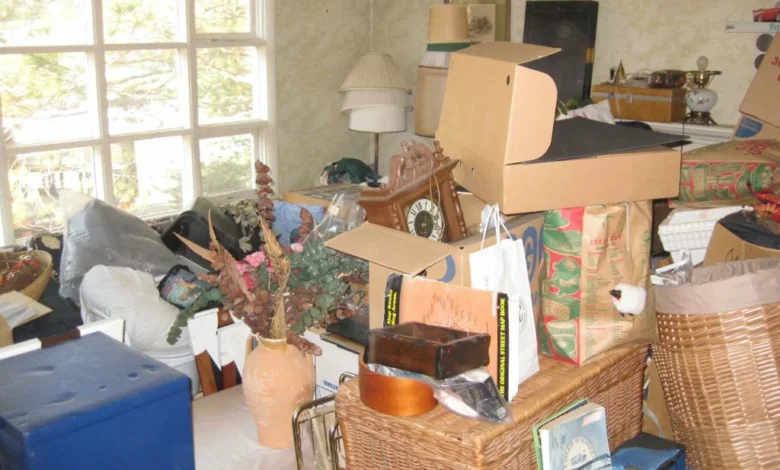
Situations involving hoarding behavior deserve a specific note here. When a loved one accumulated items at an extreme level over many years, the standard estate cleanout framework doesn’t apply. The volume is different, the logistics are different, and in some cases the structure of the home may be affected. Specialized cleanout services have experience with these situations in ways that general family labor simply doesn’t.
Divide Sentimental Items With a System, Not a Conversation
This is the flashpoint for most family explosions. Items with high emotional value, but no clear market value, photo albums, personal correspondence, Dad’s bomber jacket, are ripe for massive disagreements, since everyone believes Mom loved them best and would have wanted them to have it.
Do not hash this out in a group meeting. Those never work out. Instead, have a system. A round-robin draft works well, because it takes arm-wrestling out of each individual selection. Or go through room by room, with each person taking an item, until you run out of items or people to take them.
Whatever system you use, document the outcomes. Who took what, by agreement. This protects everyone and leaves no room for “I never agreed to that” disputes after the fact.
Pace the Sorting Sessions Deliberately
According to the National Association of Senior Move Managers, emptying an average 3-bedroom family home accumulated over 30 to 40 years usually demands between 100 and 150 hours of hard physical labor if it’s all been left to the family. Not a weekend project. Not really a week-long one, either. This is a month or more of solid graft, and it’s before you factor in the grief that brings each single decision to a shuddering, grinding halt.
Never sort for more than, absolute maximum, three or four hours at a time. Decision fatigue is a real thing, and it multiplies like Russian dolls when every single item represents a constellation of memories. Get to a certain tipping point and people don’t make good choices. They make rapid choices, and that usually results in the disposal of items that should be kept, or the retention of stuff out of guilt.
Four-category system for every single item: Keep, Sell, Donate, Discard. Decision gets made as to which of those four categories an item is before it physically moves from the spot. Keeps you out of three hours of torment for every lamp, and means that by the end of the room you have a mostly clear idea as to how much of each category is heading to the next location.
Handle the Estate Sale and Donations Strategically
Once the most personal items have been disbursed, and the general inventory of what’s left is complete, it’s time for the estate sale or liquidation. There are local pro firms that specialize in these phases. They price everything, lay it out, and arrange for a public sale over a weekend or a few days. They earn a percentage of total sales. For a large estate, particularly if the home itself is expected to be part of the marketable assets, a pro sale manager may be a practical solution. These companies know what items can fetch on the current market, and also act as a buffer and clearinghouse between the unused toaster crowd and the personal space of the survivors.
Donations come next. Charities, church-affiliated organizations, and some non-profit thrift stores are tax-exempt and will write you a receipt for donated clothing, kitchenware, furniture, and all the other flotsam after a loved one dies that still has some value for people less fortunate. A realistic yard-sale value assessment is all that’s required on the receipt, but get it at the time of drop-off or pickup so you can include it with the final tax return.
There’s one exception to the bulk drop-off rule for donations or trash: hazardous household waste. Old paint, solvents, chemicals, old tech components, even old medications can’t simply be thrown out. Most communities have an annual set-aside day or a local government facility for hazardous waste that’s regularly open. Those items need to be separated and stored until proper disposal.
Identity protection matters at every stage of document sorting. The deceased’s personal records, old credit card statements, medical files, financial account documents, are actively targeted by identity thieves, who know that estate periods create windows of vulnerability. Shred rather than discard. A basic cross-cut shredder handles most of it; for large volumes of sensitive documents, mobile shredding services are available.
When to Call in Help Earlier Than You Planned
Let’s face it, DIY estate cleanouts are always more than you think they’re going to be. The 100-to-150-hour labor estimate isn’t too far off base if you honestly believe everyone’s going to work hard for that long, if your numbers are healthy adults, if you think you can avoid the added time that travel coordination with multiple heirs requires, and if you think you’ll be as efficient as the timetable assumes.
If a biohazard is part of the picture, such as when a family member died at home and several days passed before they were found, you will need certified remediation professionals to handle that aspect before you bring anyone else in for the rest of the work. The arrival of the pros who can legally transport and dispose of biohazardous materials is non-negotiable.
Even without that complication, if you’re on the hook to get the property listed promptly because of estate carrying costs, ongoing mortgage obligations, or a tax-related urgency or a market window that’s closing, the economics of doing literally everything yourselves are not going to pan out. Bringing in some pro help sooner than you planned isn’t an admission that you can’t handle this. It’s a realistic judgment that a family must make if it’s actually going to get through this.
The Goal is to Close This Chapter Cleanly
A proper estate cleanout doesn’t change the fact that someone you love has died, nor does it make it hurt any less. What it does do is give you the closure on the practical aspects of their passing that you need to start processing your grief and putting your emotional affairs in order. It’s also a key step in bringing their affairs to a proper conclusion so you can get on with things.